




Aryna Sabalenka Live: A Firsthand Report by Mohit
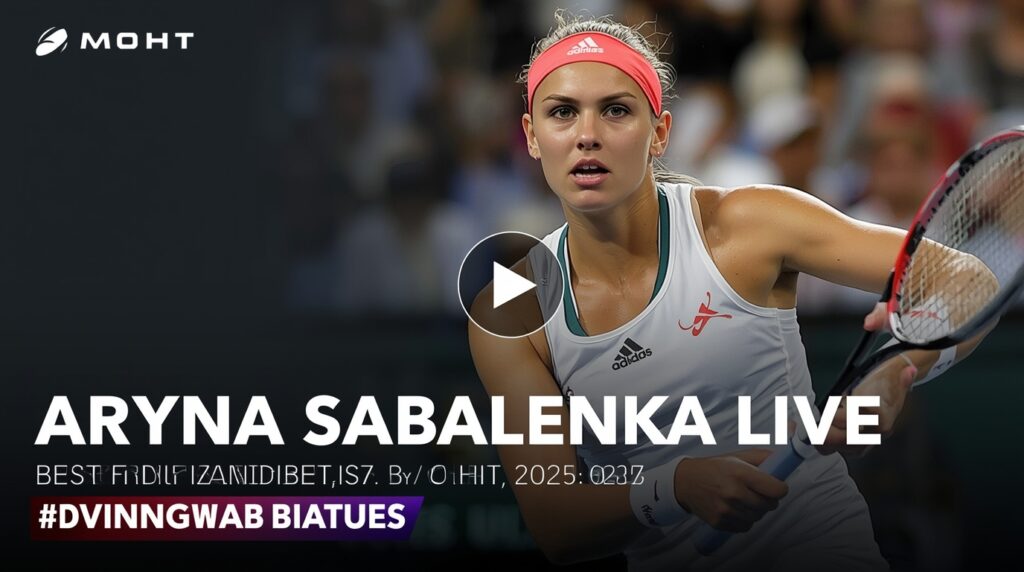
There’s an energy that fills a stadium just before a top-tier tennis match, a low hum of anticipation that you can feel in your bones. But when Aryna Sabalenka steps onto the court, that hum transforms into something electric. I’m Mohit, and I’ve been courtside for some of the most pivotal moments of her career, watching the raw power and emotion she brings to every single point. It’s one thing to see it on TV; it’s another thing entirely to be there, to feel the percussive thwack of the ball off her racquet and witness the sheer force of will that defines her game.
From my seat, just a stone’s throw from the baseline, you get a perspective that cameras can’t capture. You see the subtle shifts in her stance, the intense focus in her eyes as she prepares to serve, and the way she uses the crowd’s energy, channeling it into her performance. Sabalenka doesn’t just play tennis; she commands the court. Her presence is a spectacle of athleticism and fire, a combination that has made her one of the most compelling athletes to watch in the world today. This isn’t just a report; it’s a look inside the storm, from someone who has stood on its edge.

The Power Game Up Close
The first thing that strikes you when you see an Aryna Sabalenka live performance is the sound. It’s a sonic boom. Her serve isn’t just fast; it’s heavy. You hear the effort in her grunt, a sound that has become as much a part of her brand as her aggressive groundstrokes. Sitting here, I can attest that the sound echoes through the arena, a clear statement of intent. Each forehand and backhand is a cannon shot, designed not just to win the point, but to dominate it.
I remember one night match under the lights at the US Open. The New York crowd was buzzing, and Sabalenka was locked in a tight battle. Her opponent was a master of defense, returning everything with frustrating consistency. But Sabalenka refused to be drawn into a war of attrition. Instead, she doubled down on her power. From my vantage point, I could see her consciously planting her feet, coiling her body, and unleashing a crosscourt forehand that seemed to defy physics. The ball kissed the line, kicking up a puff of chalk. The crowd roared, not just for the winner, but for the audacity of it.
This is the essence of her game. It’s high-risk, high-reward tennis that keeps you on the edge of your seat. She forces errors by applying relentless pressure, hitting with a depth and pace that shrinks the court for her opponents. You can see the mental toll it takes on the other side of the net. Players start to second-guess their shots, hitting shorter, playing safer, and ultimately giving Sabalenka the control she thrives on. Her game is a physical and psychological assault, and watching it unfold in person is an incredible experience.
The Emotional Rollercoaster
To truly understand Sabalenka, you have to look beyond the power. She is one of the most emotionally transparent players on the tour. She plays with her heart on her sleeve, and you can see every flicker of joy, frustration, and determination on her face. This emotional honesty is a huge part of what makes her so relatable and captivating to a US audience that appreciates authenticity. We love athletes who aren’t afraid to show what the game means to them.
I was there for a match in Cincinnati where things weren’t going her way. The first set slipped by, her unforced error count was climbing, and you could feel the frustration building. She’d look over at her coaching box, a mix of pleading and anger in her eyes. She’d talk to herself between points, sometimes gesturing wildly. To some, it might look like a player unraveling. But from my perspective, it looked like a fighter trying to find her way out of a corner.
Then came the turning point. After a particularly grueling rally that she lost, she smashed her racquet on the ground. The crowd gasped, but what followed was remarkable. It was a release. She took a deep breath, walked to her chair with a new sense of calm, and came back out a different player. The wild swings became controlled aggression. The errors diminished, replaced by pinpoint winners. She had battled her own demons in front of thousands and won. She went on to win the match, not just with her power, but with her resilience. This emotional journey is a key part of the Aryna Sabalenka live spectacle; it’s drama, sport, and human struggle all rolled into one.
A Technical Masterclass in Aggression
While her power is what gets the headlines, watching Sabalenka play live reveals the incredible technique behind the force. Her game is not just brute strength; it’s a finely tuned machine built for attack. Her serve, for example, is a marvel of biomechanics. I’ve watched her warm up countless times, and the fluidity of her motion is deceptive. She has a high ball toss that gives her maximum time to load up, using her entire body—legs, core, and shoulder—to generate explosive racquet-head speed. It’s not just about hitting it hard; it’s about placement, varying between flat bombs down the ‘T’ and wicked kick serves out wide.
Her groundstrokes are equally impressive up close. She takes the ball incredibly early, standing on top of the baseline and robbing her opponents of time. Her footwork is relentless. She’s constantly moving, taking small, explosive steps to get into the perfect position to unload on the ball. Her open-stance forehand allows her to generate immense power even when stretched wide, while her two-handed backhand is a weapon she can use to dictate play from anywhere on the court.
I recall a point during the Australian Open final. She was in control of the rally, pushing her opponent from side to side. Then, she saw her opportunity. She moved inside the court, took a shoulder-high ball, and ripped a backhand down the line that was simply untouchable. The technique required to execute that shot under pressure—the timing, the balance, the full-body rotation—is something you can only fully appreciate when you see it in person. It’s a testament to the thousands of hours she has spent honing her craft. She has turned aggressive tennis into an art form.

The Mental Fortitude of a Champion
For years, the narrative around Sabalenka was that of a talented player who lacked the mental game to win the big one. Her struggles with the yips on her serve were well-documented, and I witnessed those moments of doubt firsthand. There were matches where you could see the confidence drain from her after a few double faults. The crowd would grow quiet, sensing her fragility. It was tough to watch.
But what I’ve seen over the past couple of years is one of the most impressive mental transformations in modern sports. She didn’t just fix her serve; she rebuilt her entire mental approach to the game. She worked with sports psychologists and biomechanics experts, but more importantly, she took ownership of her challenges. She learned to laugh at her mistakes, to accept imperfection, and to trust herself in the biggest moments.
That change was never more apparent than during her breakthrough Grand Slam win. I was in the stadium, and the tension was suffocating. Every point felt like a match point. In previous years, this was where Sabalenka might have cracked. But this time was different. You could see the self-belief in her eyes. When she faced break points, she didn’t get tentative; she went for her biggest serves. When a groundstroke flew long, she didn’t slump her shoulders; she reset and prepared for the next point.
Winning that final was more than just a tennis victory; it was a triumph of the will. It was the culmination of a long, difficult journey, and being there to see her finally lift that trophy was a privilege. The roar of the crowd was deafening, a wave of affection and respect for a player who had shown everyone what it means to be a true champion. She had stared down her own doubts and emerged stronger than ever.
Connecting with the American Crowd
Sabalenka’s appeal in the United States goes beyond her on-court success. American sports fans have a soft spot for athletes who are unapologetically themselves, and Aryna fits that mold perfectly. Her candid post-match interviews, her sense of humor, and her genuine interactions with fans have won her a loyal following. She doesn’t give robotic, media-trained answers. She’s real.
I’ve been at her press conferences, and she has a way of disarming the room. She’ll joke about her errors, praise her opponents with genuine respect, and speak openly about her feelings. After one tough loss, a reporter asked her a difficult question about her performance. Instead of getting defensive, she smiled wryly and said, “Today, she was just too good. I tried to hit the ball hard, and sometimes it went in, sometimes it went to Miami.” The room erupted in laughter. It’s that kind of self-awareness and humor that endears her to people.
Her on-court interviews are even better. She’ll often grab the microphone and speak directly to the crowd, thanking them for their energy and support. You can tell it’s not just for show; she genuinely feeds off the atmosphere. At the US Open, the New York crowd can be tough, but they respect fighters. Sabalenka’s willingness to leave it all on the court, win or lose, has earned their respect. They roar for her winners, groan at her errors, and ride the emotional rollercoaster with her. This connection makes watching an Aryna Sabalenka live match an interactive experience. You feel like you’re part of her team.

The Future is Bright and Loud
As I sit here, watching her prepare for another season, it’s clear that we are in the golden era of Aryna Sabalenka. She has the power, the technique, and now the mental fortitude to dominate the sport for years to come. She has proven she can win on any surface, and her game continues to evolve. She’s adding more variety—slice backhands, drop shots, and a willingness to come to the net—making her an even more formidable opponent.
The next chapter of her career will be fascinating to watch. Can she add more Grand Slam titles to her name? Can she achieve the coveted world number one ranking and hold onto it? Based on what I’ve seen with my own eyes, the answer to both of those questions is a resounding yes. Her hunger for success is palpable. She is not satisfied with what she has already achieved; she wants more.
For any sports fan, seeing an athlete at the peak of their powers is a special experience. If you ever get the chance to see an Aryna Sabalenka live match, take it. Don’t hesitate. You will witness a display of power, passion, and personality that is unmatched in tennis today. You will be captivated by her intensity and charmed by her authenticity.
From my seat in the stands, I can tell you this: the storm is still building. The sound of her game will continue to echo through stadiums around the world, and I, for one, will be there to report on every thunderous forehand and every hard-fought victory. The story of Aryna Sabalenka is far from over, and it’s a privilege for all of us to be watching it unfold.